




Defrag Incremental is a retro incremental game about doing one very specific job on an increasingly overworked 90s PC: defragmenting disks for money.
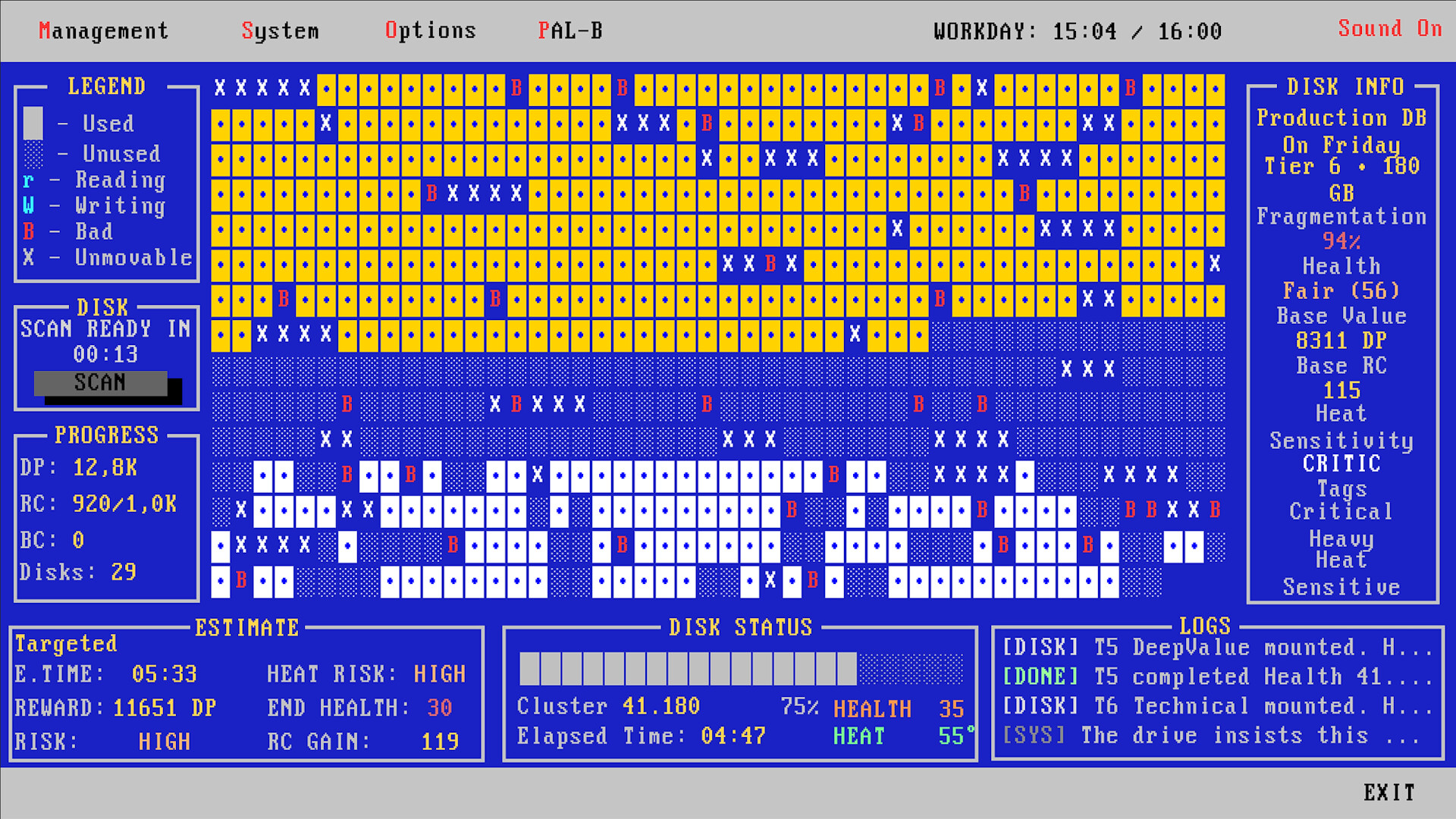
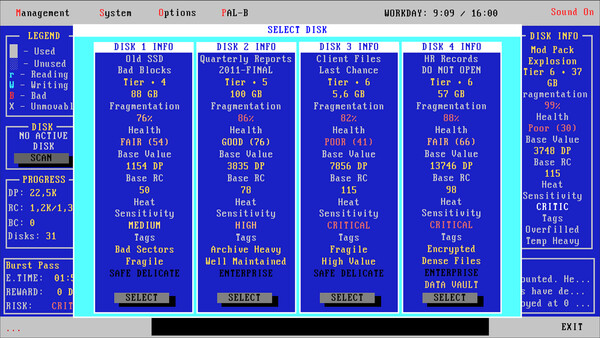
At first, the job is simple. Pick a disk, choose an algorithm and get it done before the workday ends.
Then the disks get bigger.
Some arrive damaged. Some run hot. Some are worth a lot more than they have any right to be. Your computer gets faster too, but faster hardware also gives you more ways to push things too far.
PICK YOUR JOB
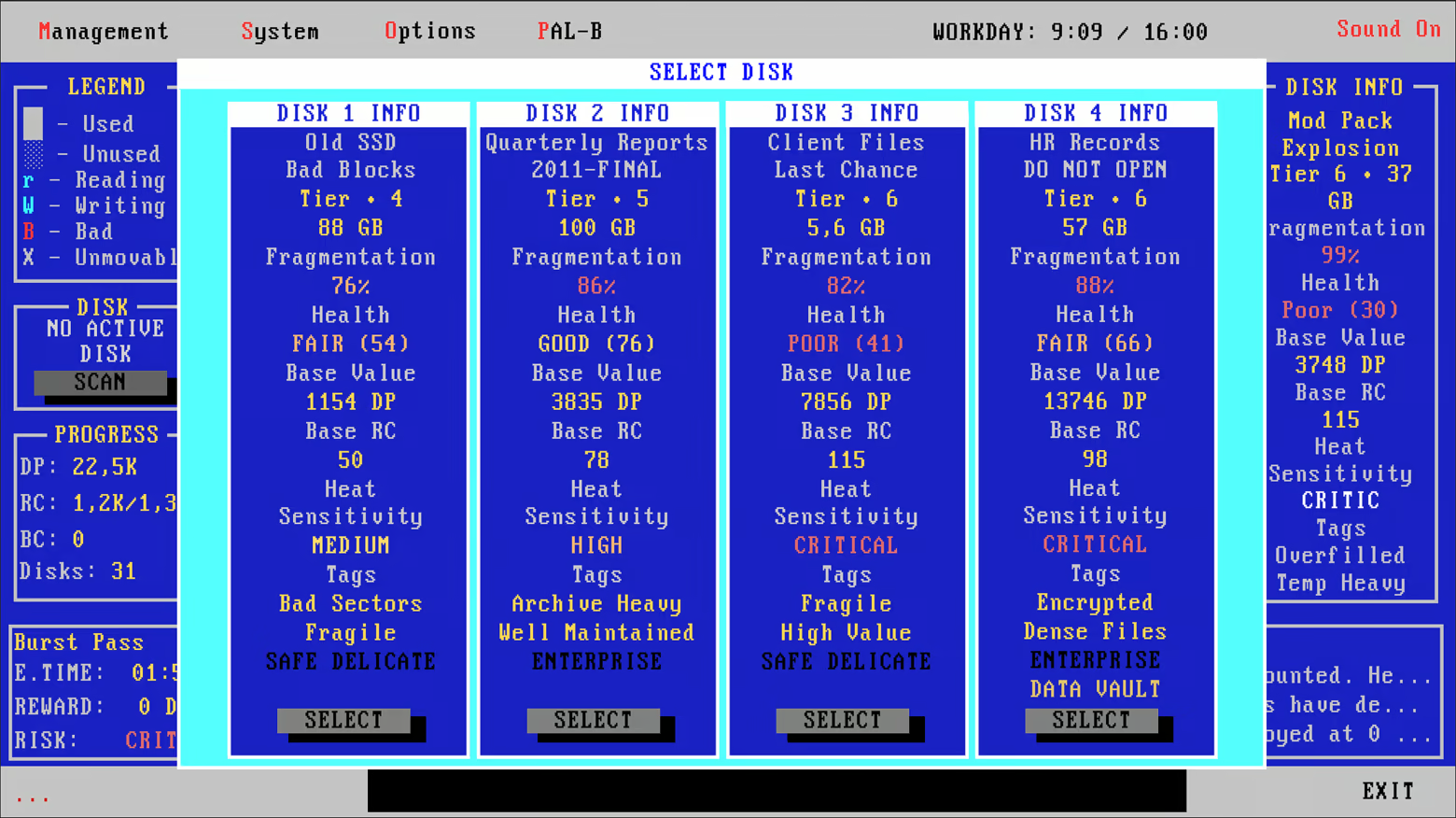
You don't have all day.
Disks come with different sizes, values, conditions and properties, and taking the most expensive one is not always the smart choice. A job that looks profitable can become a problem if it runs past the end of the shift or your hardware isn't ready for it.
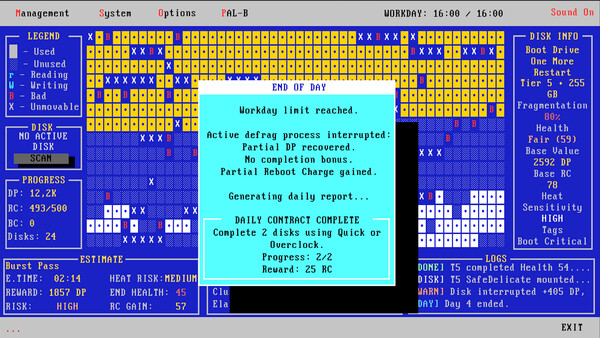
Daily conditions and contracts can also change what is worth doing from one workday to the next.
DECIDE HOW TO RUN IT
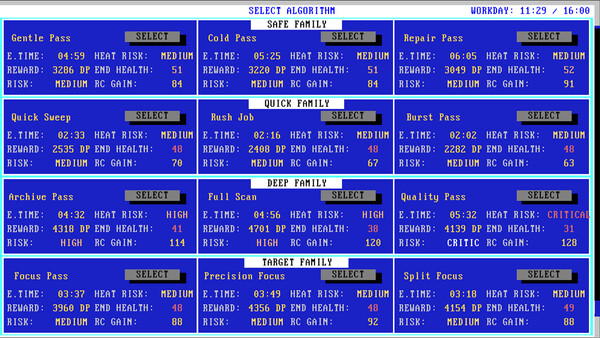
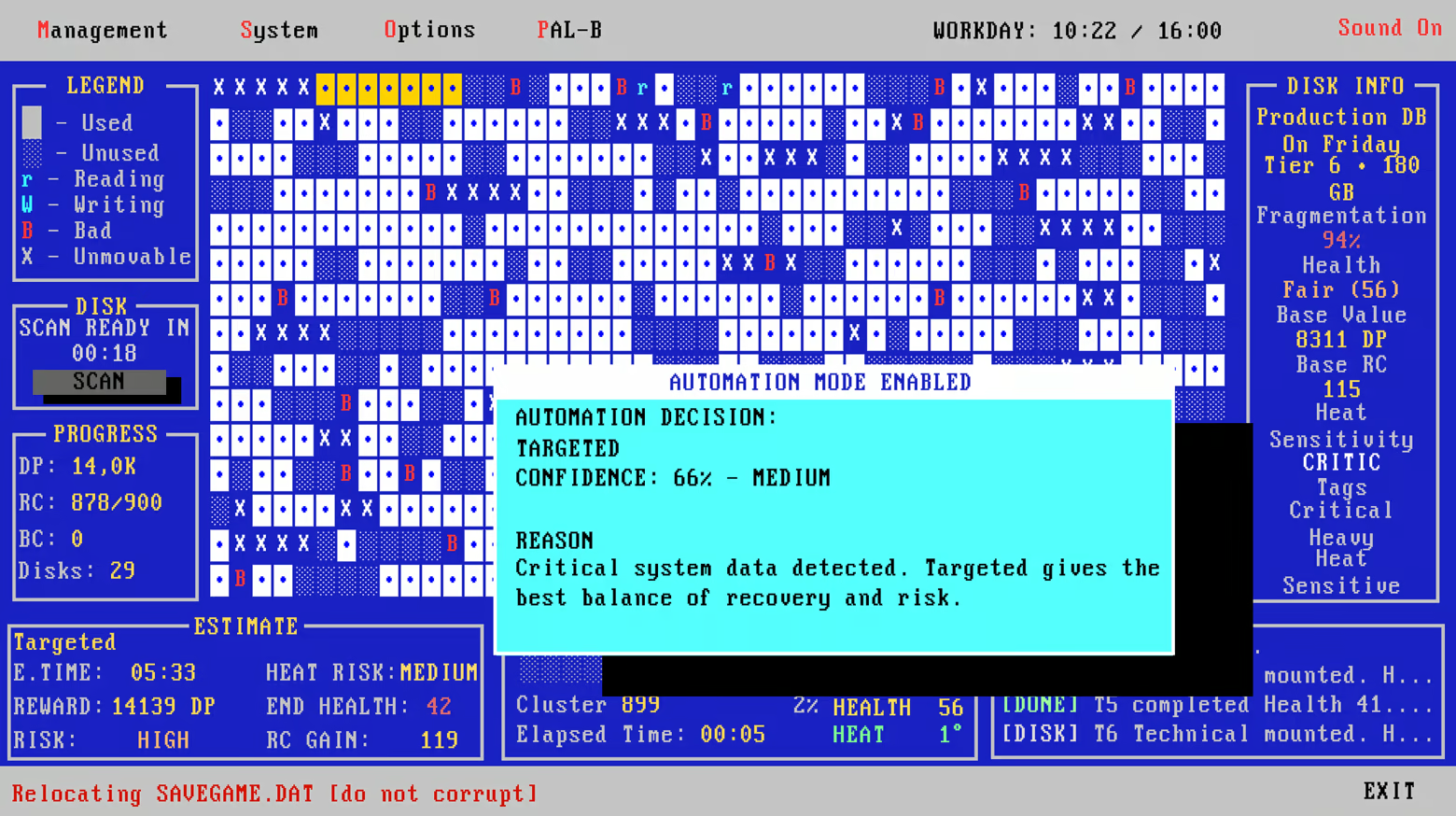
Algorithms and modes trade speed, reward, heat, wear and safety against each other.
There isn't one setup that is best for every disk. Sometimes you want to finish as quickly as possible. Sometimes keeping a damaged disk alive matters more. Sometimes you just need to get something finished before the clock runs out.
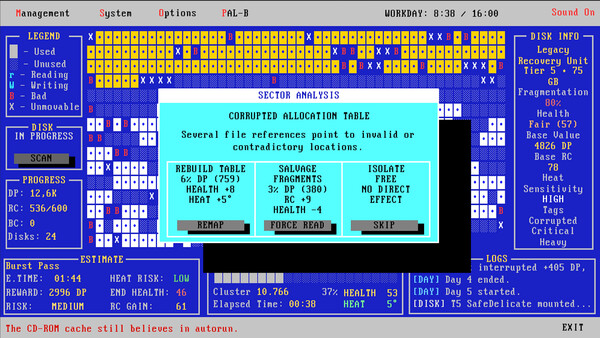
Once a disk is running, you can keep an eye on its health and temperature and intervene when things start going wrong.
MAKE THE COMPUTER BETTER
Finished jobs give you Defrag Points to spend on the current run. Improve read and write performance, cooling, recovery and the other parts of the machine that are holding you back.
As those upgrades stack up, disks that were painfully slow at the start become manageable and new tiers begin to make sense.
The System Stats panel keeps track of the combined effects of your upgrades, so you can see what the machine is actually capable of.
THEN REBOOT IT
Rebooting is the prestige layer.
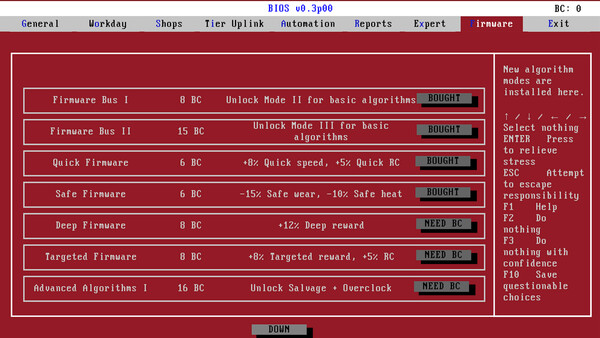
Your temporary run upgrades are reset, but the Reboot Charge you've built up becomes BIOS Chips. These are spent on 53 permanent BIOS upgrades that stay with you between runs.
They unlock new shops, automation, longer workdays, advanced controls and other tools that gradually change how each new run plays.
So every run starts again, but it doesn't start from the same place.
AUTOMATION HELPS. YOU CAN DO BETTER.
Eventually the computer can take over some of the routine work.
Automation follows a simple set of rules. It can keep things moving on its own, but an attentive player can make better choices about disks, algorithms and risk. You can leave it alone, step in when it matters, or gradually automate more of the job as the system grows.
THE JOB PAYS THE BILLS
The money you make from disks is separate from the points used to upgrade the computer.
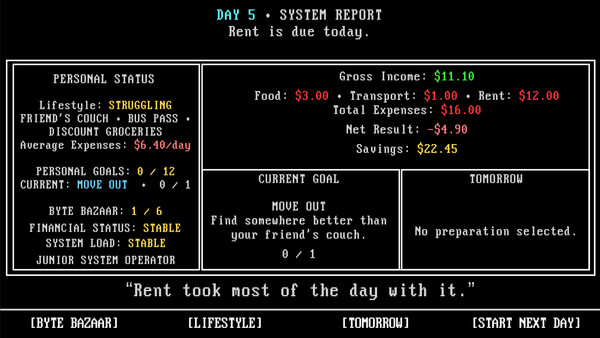
What happens during the workday follows you home: finished jobs, lost rewards and interrupted shifts affect a separate life-management layer between workdays.
Housing, transport, food and other expenses gradually turn the money you earn at the computer into another part of the progression.
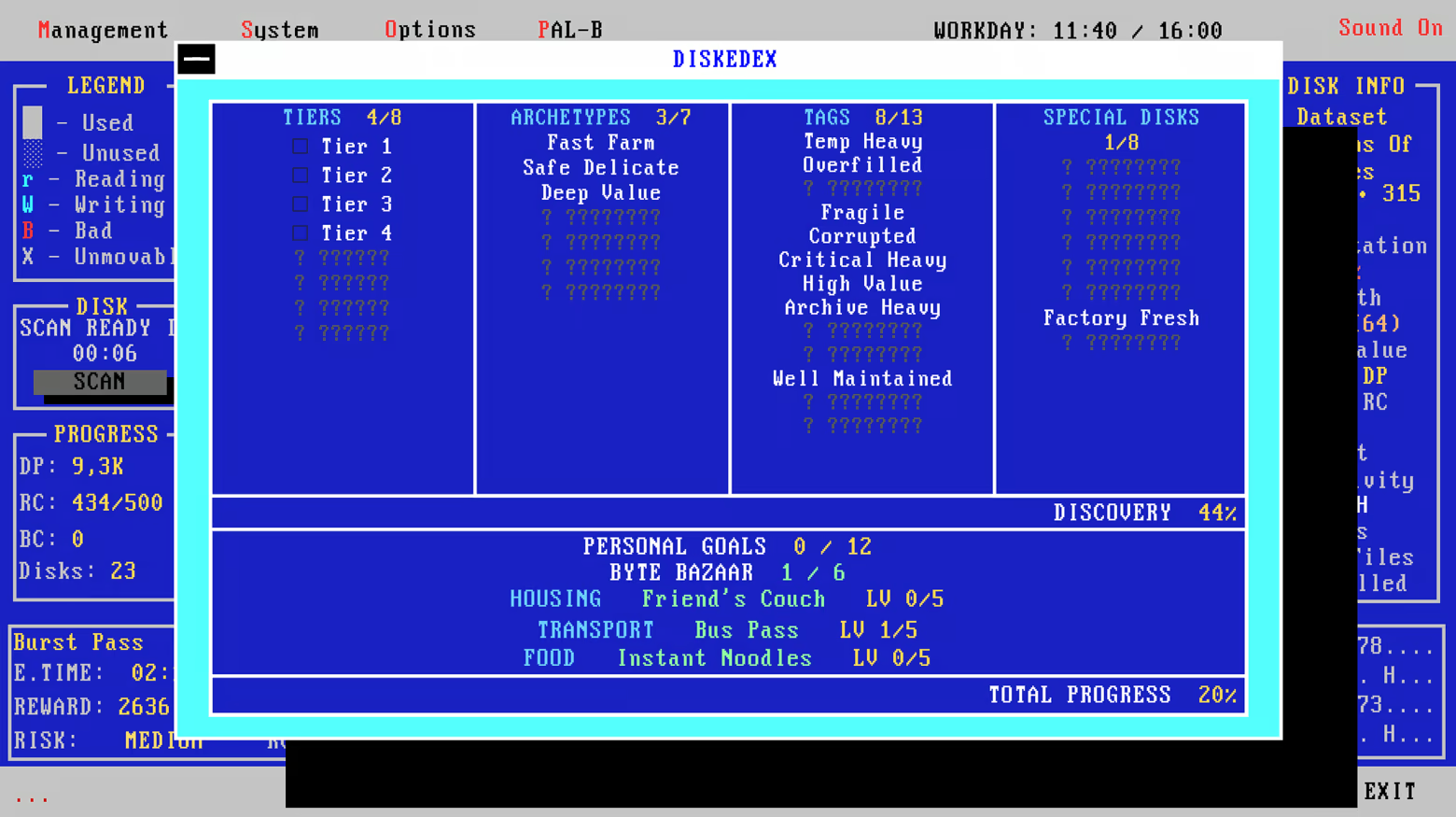
FILL THE DISKDEX
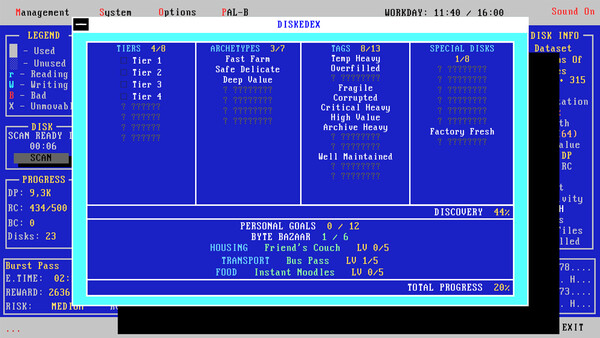
The computer keeps track of what you've discovered and how far you've made it through the game.
New tiers, archetypes, tags and special disks fill out the database alongside personal goals, Byte Bazaar discoveries and your progress outside work.
If seeing 100% next to a database makes something in your brain happy, there is plenty here to fill in.
BUILT LIKE AN OLD COMPUTER
The whole game lives inside a fictional desktop inspired by the PCs and operating systems of the 1990s: BIOS screens, little utilities, reports, ugly system messages, questionable noises and far too many windows.
The machine starts simple. It doesn't stay that way.
WHAT'S IN THE MACHINE
8 disk tiers
7 disk archetypes
13 disk tags
8 special disks
24 algorithm/mode combinations
3 upgrade shops
53 permanent BIOS upgrades
Expert controls for fine-tuning how the system behaves
Automation for handling routine work
Daily conditions and contracts
A separate financial and life-management layer
12 personal goals
6 Byte Bazaar discoveries
Housing, transport and food progression
A Diskdex with full completion tracking
And yes, it goes to 100%.
1 total votes
Votes this week:
Votes today: